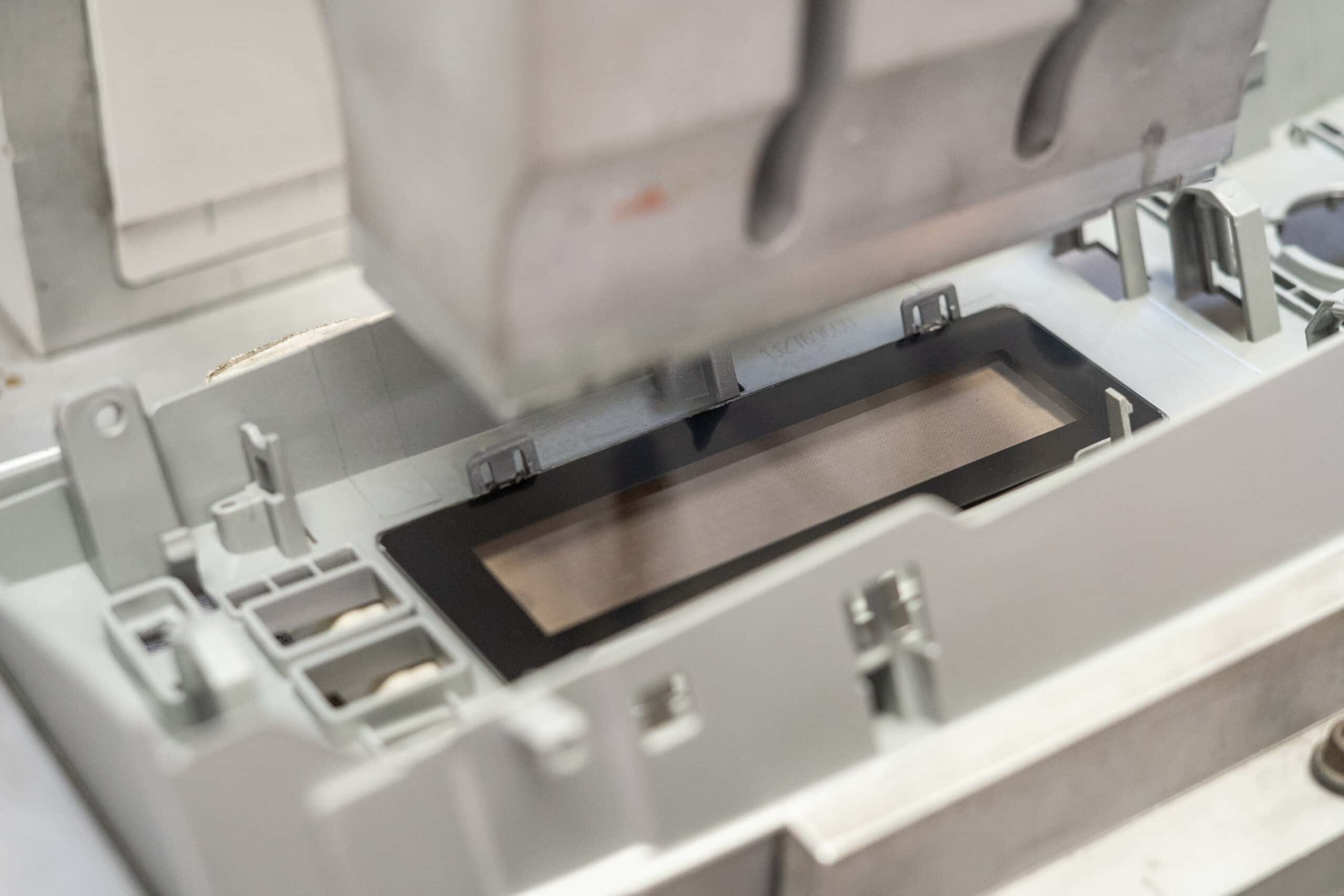
What is ultrasonic welding.
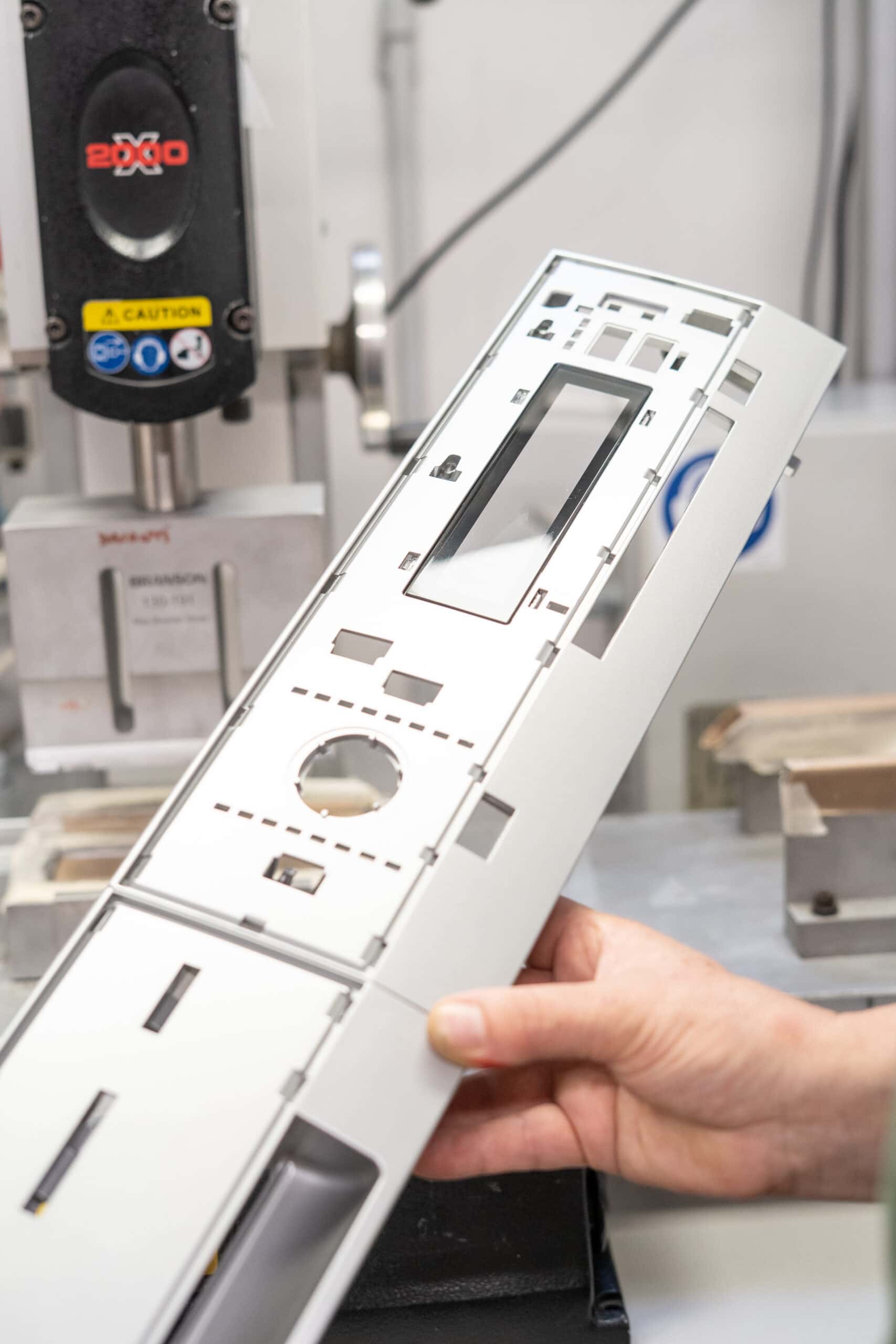
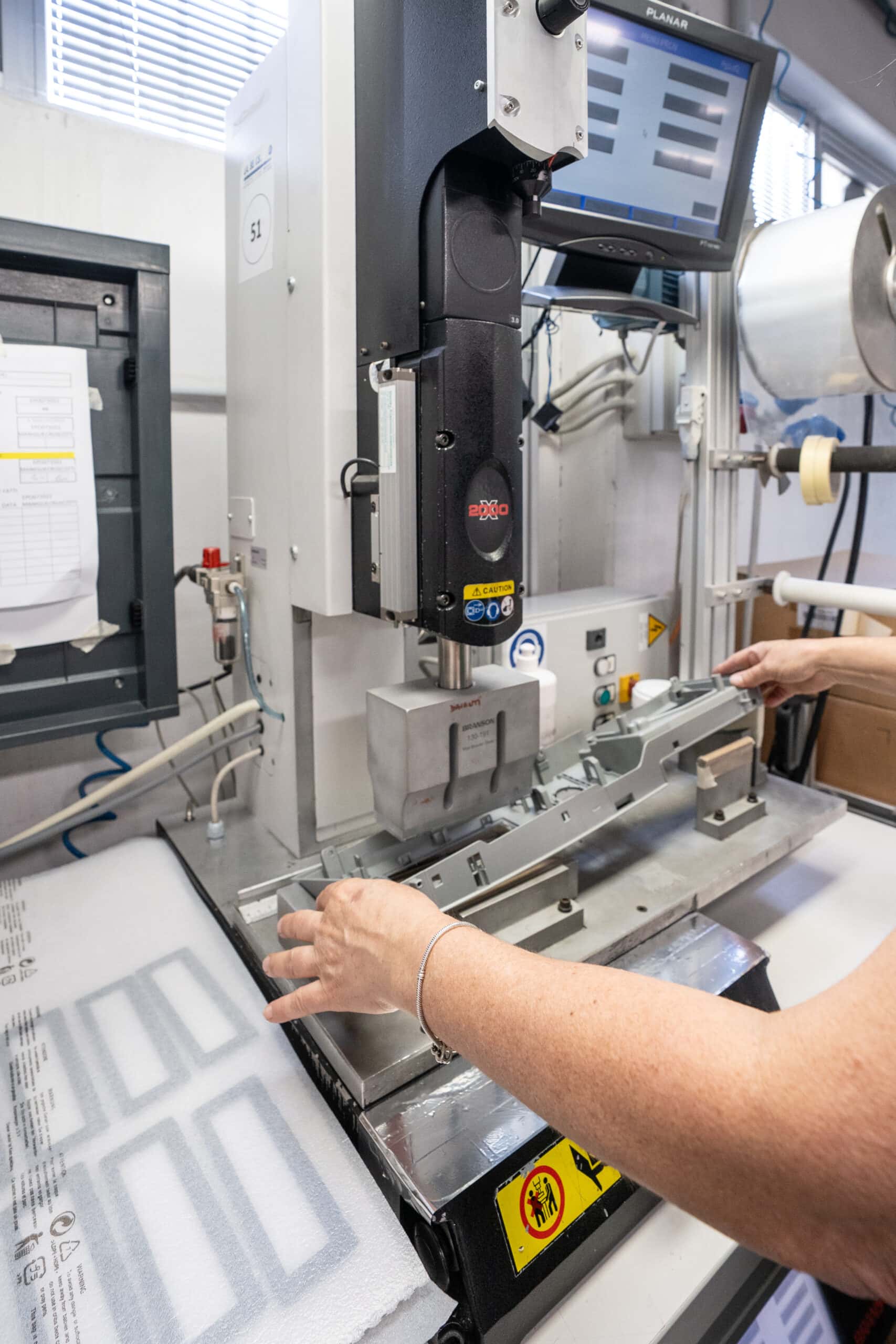
Ultrasonic welding is a joining technology that uses high-frequency mechanical vibrations, transmitted through a sonotrode, to melt and bond thermoplastic or metallic materials without the use of adhesives, solvents, or external heat sources. The heat required for welding is generated locally by molecular friction, enabling a precise, clean, and repeatable joint. This process ensures high mechanical strength of the welds and accurate control of every operating parameter, making it ideal for applications that require high quality standards and production uniformity.

Areas of application.
Ultrasonic welding is widely used across various industrial sectors, including automotive and home appliances. It is particularly suitable for joining small- to medium-sized plastic components and elements that require high dimensional precision. Thanks to the speed and reliability of the process, this technology integrates seamlessly into automated production lines, ensuring short cycle times and consistent quality even in high-volume manufacturing.
Technical advantages.
The ultrasonic welding process offers numerous advantages in terms of efficiency, cleanliness, and repeatability. The absence of filler materials eliminates the costs and time associated with the use of adhesives or solvents, minimizing environmental impact and post-processing steps. Energy is applied in a targeted manner only at the joint areas, preventing deformation or thermal alteration of surrounding parts. Weld quality is high and consistent, with excellent mechanical strength. In addition, the ability to set and monitor process parameters in real time ensures full traceability and reproducibility—essential elements in the most advanced industrial environments.

Our process.
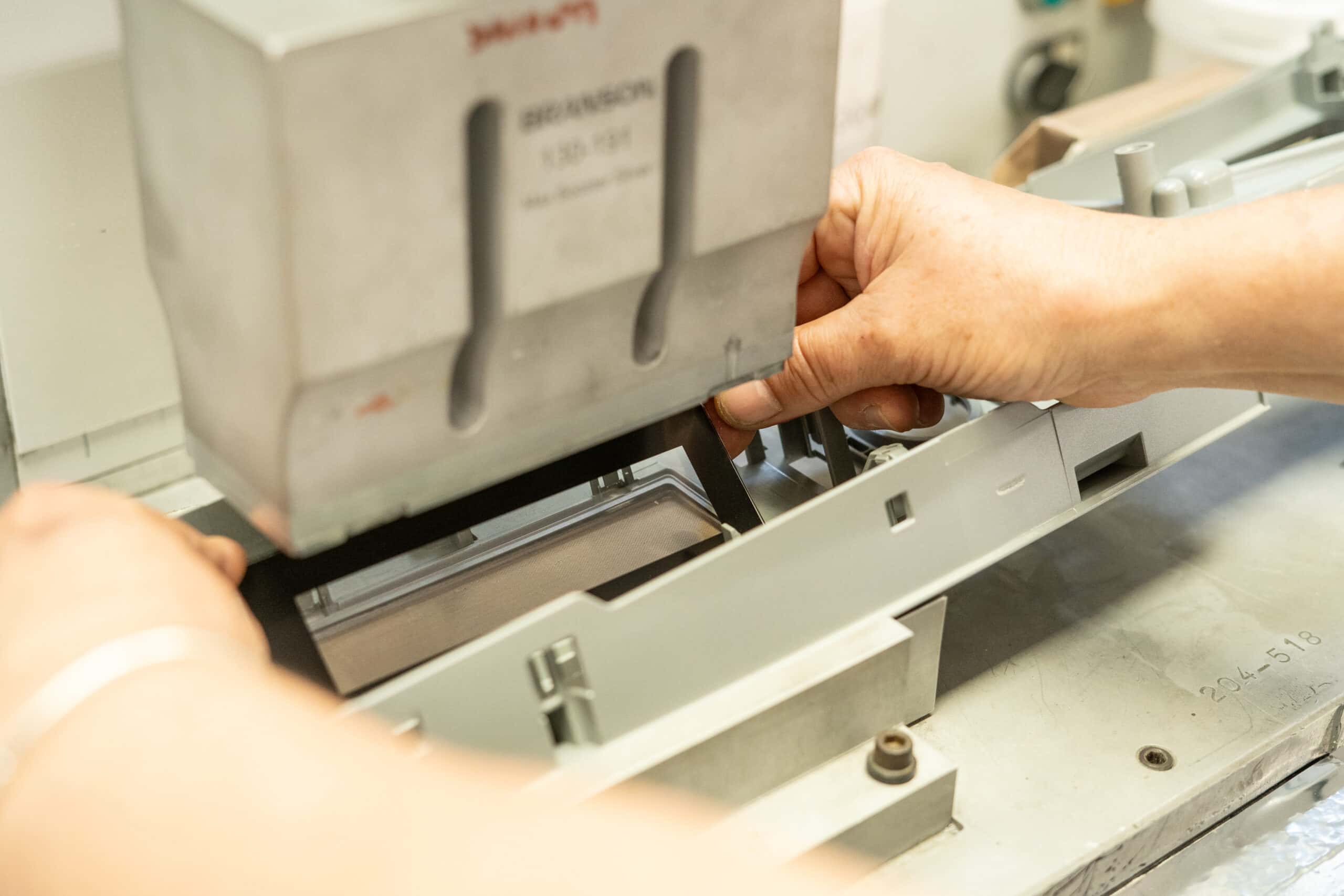
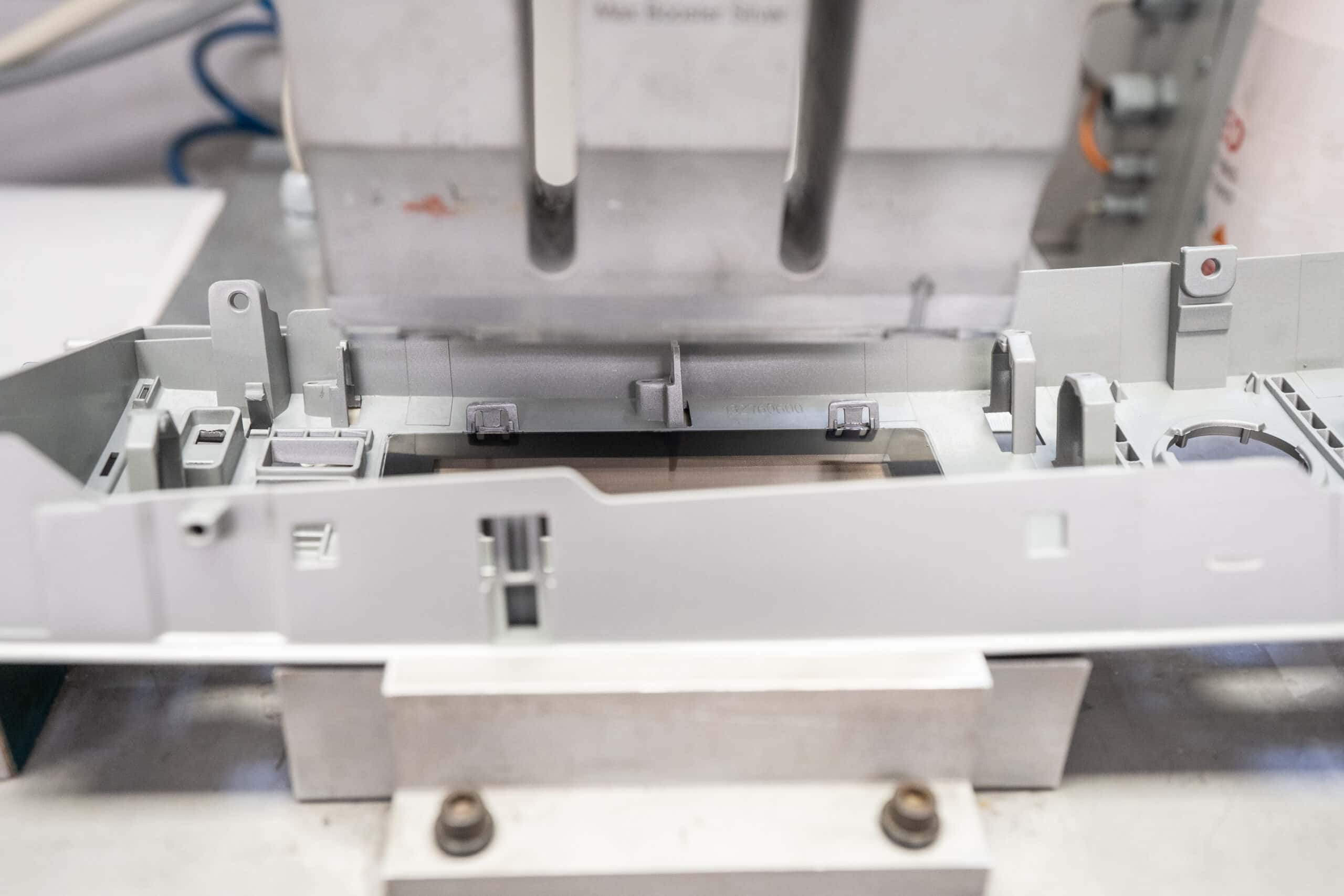
Our ultrasonic welding process is structured to ensure maximum precision and reliability. Each project begins with a technical analysis of the component and an evaluation of the material to be welded, in order to define the optimal joint design. Subsequently, sonotrodes and support tooling are developed and manufactured, custom-designed to ensure uniform distribution of ultrasonic energy. During production, power, pressure, frequency, and welding time parameters are calibrated according to the part specifications, ensuring consistent results that comply with the required standards. All processes undergo rigorous quality controls, including dimensional inspections and leak or mechanical strength tests, depending on customer requirements and applicable regulations. Our goal is to deliver high-performance ultrasonic welding solutions integrated into our customers’ production processes, ensuring efficiency, quality, and long-term durability.